Eli Heart (b. 2004)is a Los Angeles based painter who explores materiality as a visual representation of time and effect. The subject matter often is a representation of a past state, and the process, a study of the obsessive romanticization of the object before one’s own effect. Often depicting the impossible and surreal, his artwork mimics the simultaneous existence of the past and present, and what is real or imagined.
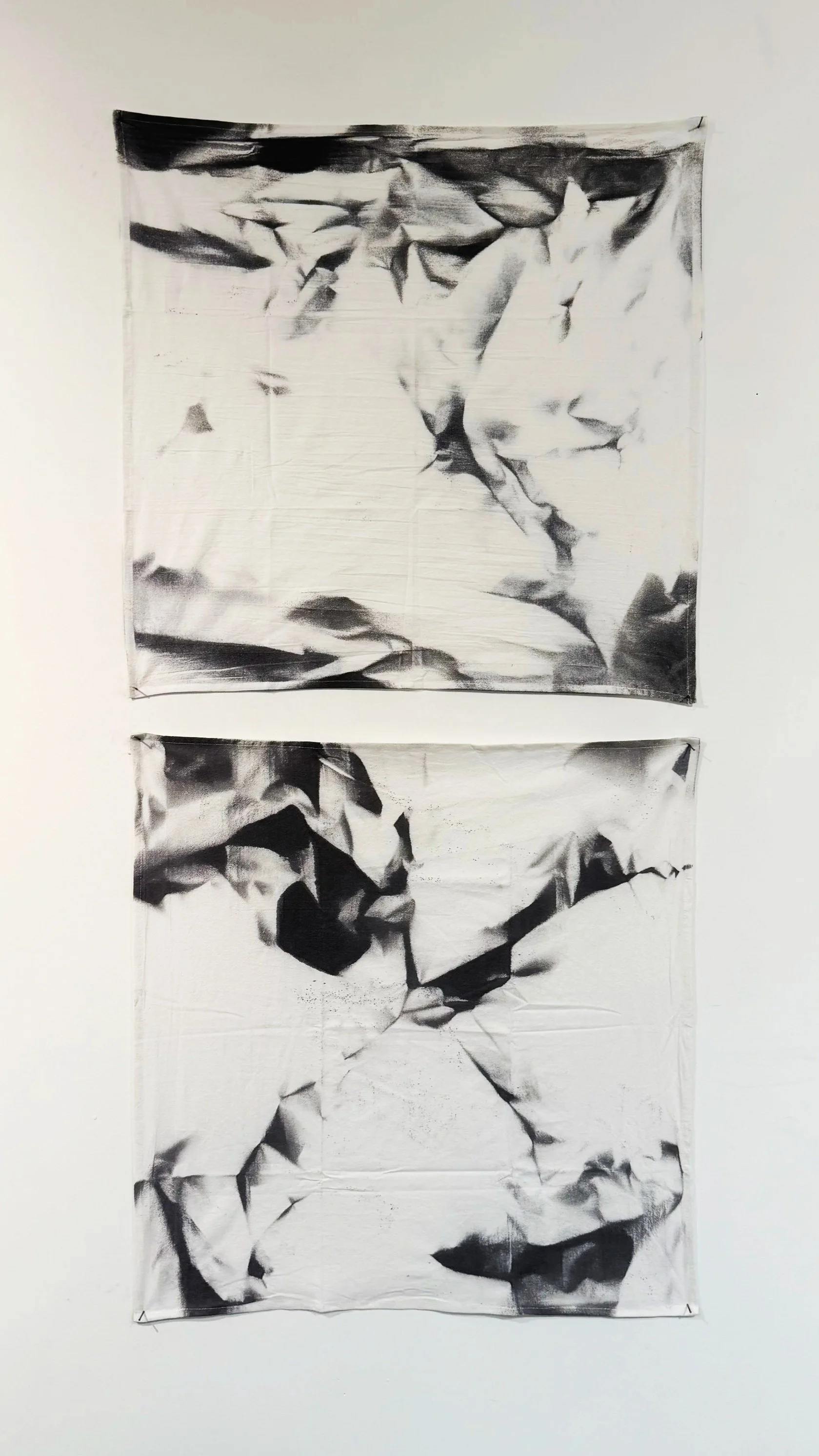
"untitled" 28 x 56", India Ink, flour fabric A study of recorded time through hand dyed fabric
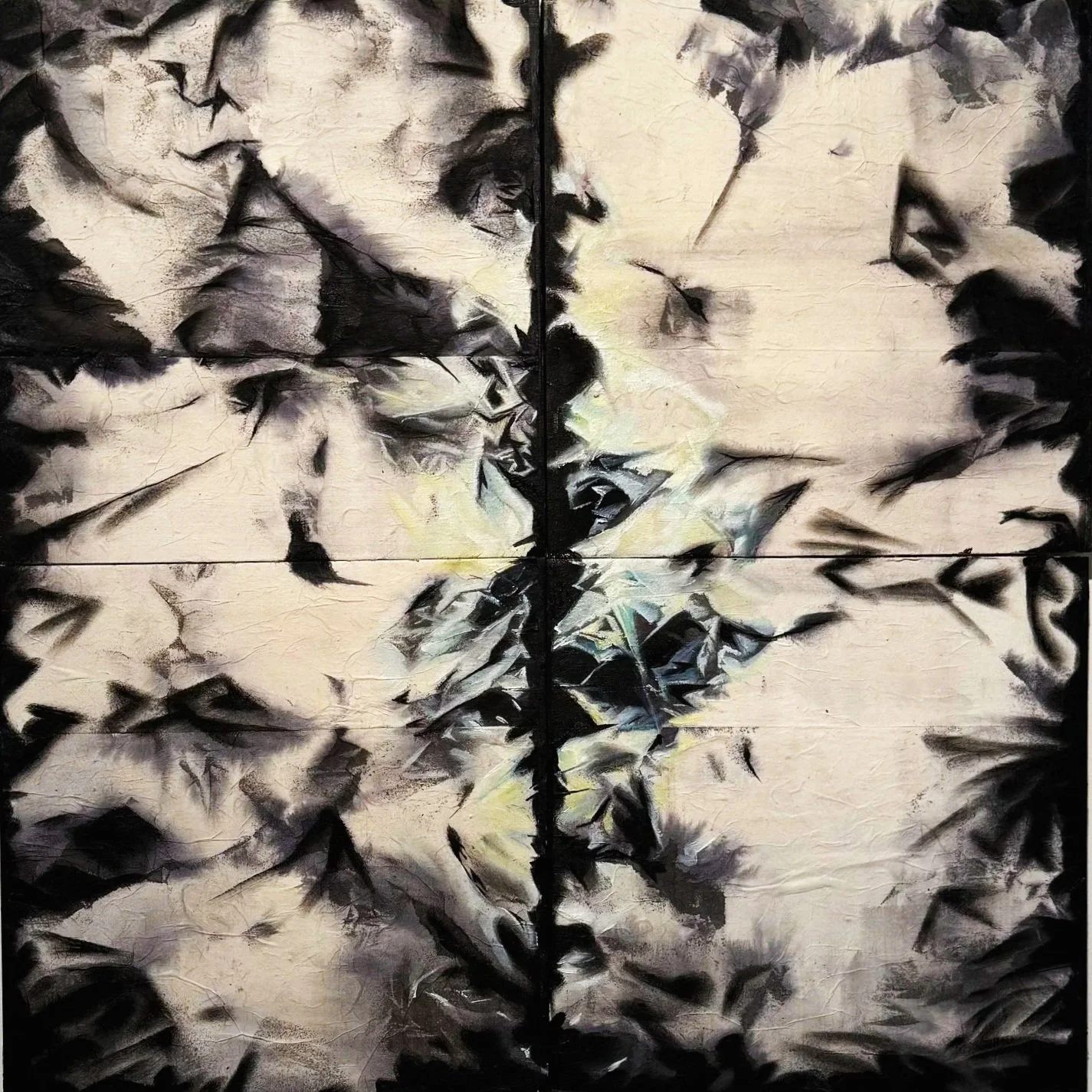
"untitled" 24 x 24", india ink, mulberry paper, oil paint, wood Hand dyed mulberry paper applied to wood as a study of texture and tactile memory
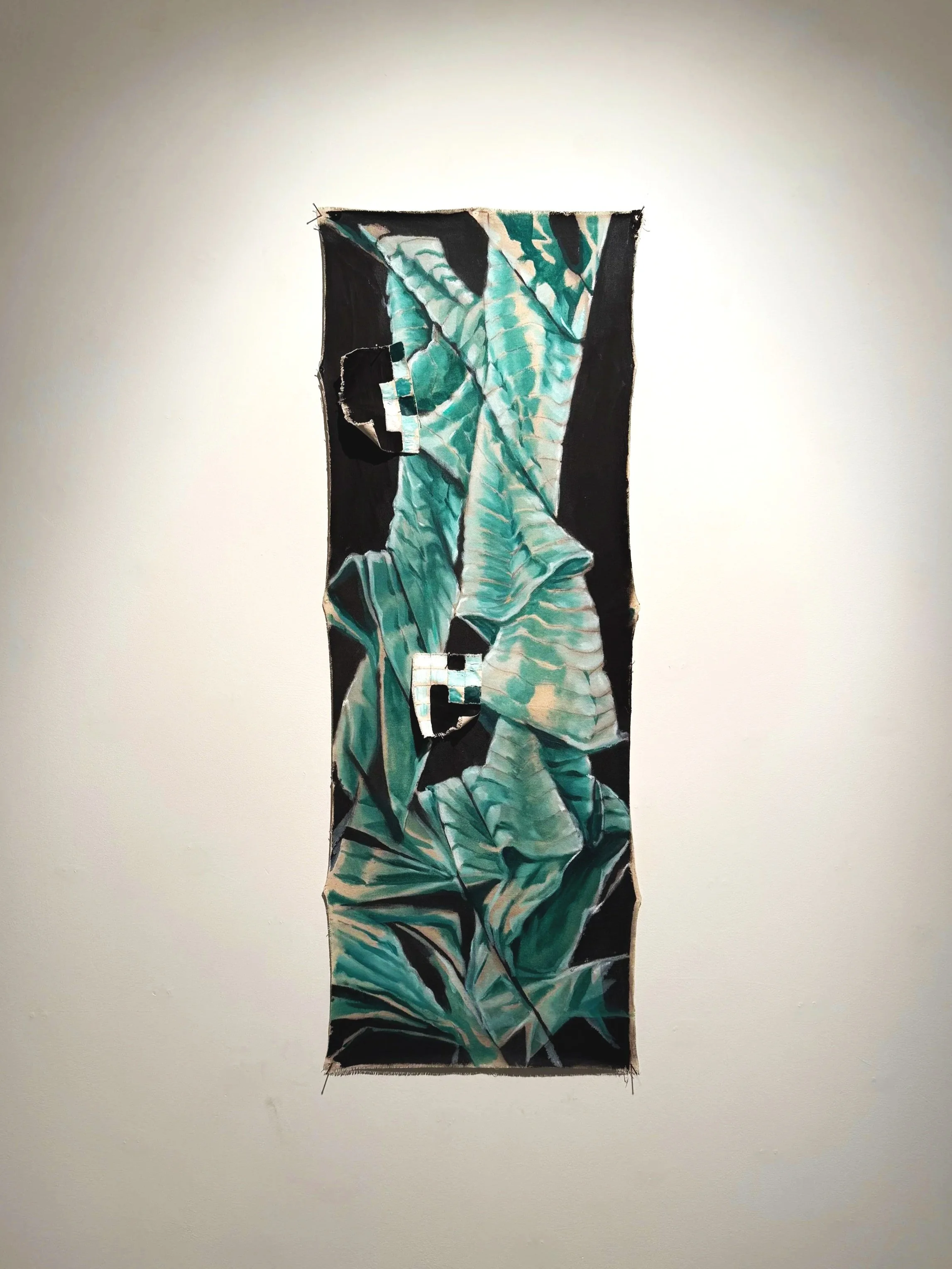
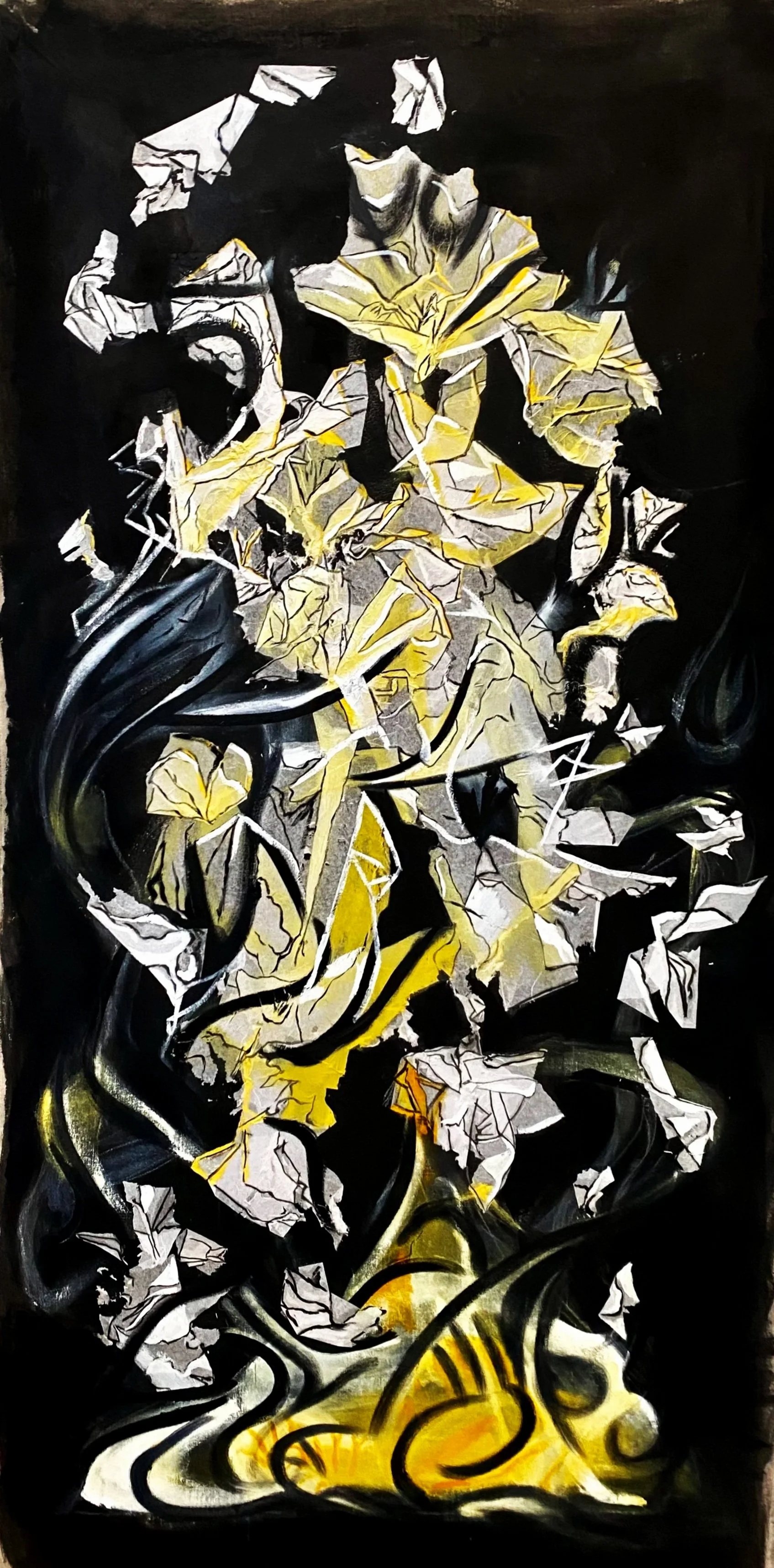
"untitled" 28 x 50" oil paint, canvas exploration of implied texture through paint and applied canvas
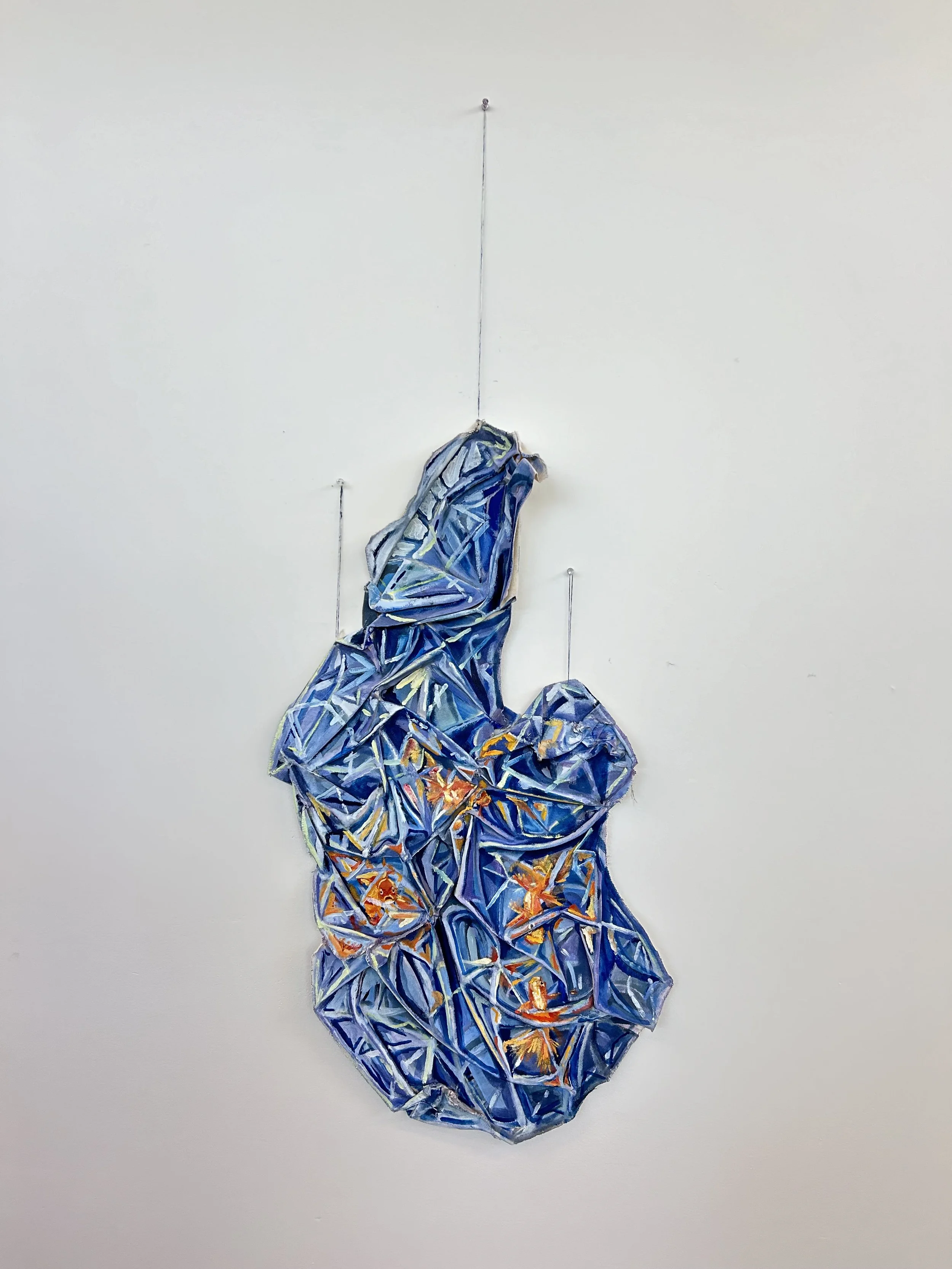
"still life of a bag" 24 x 36", Oil paint, canvas, string
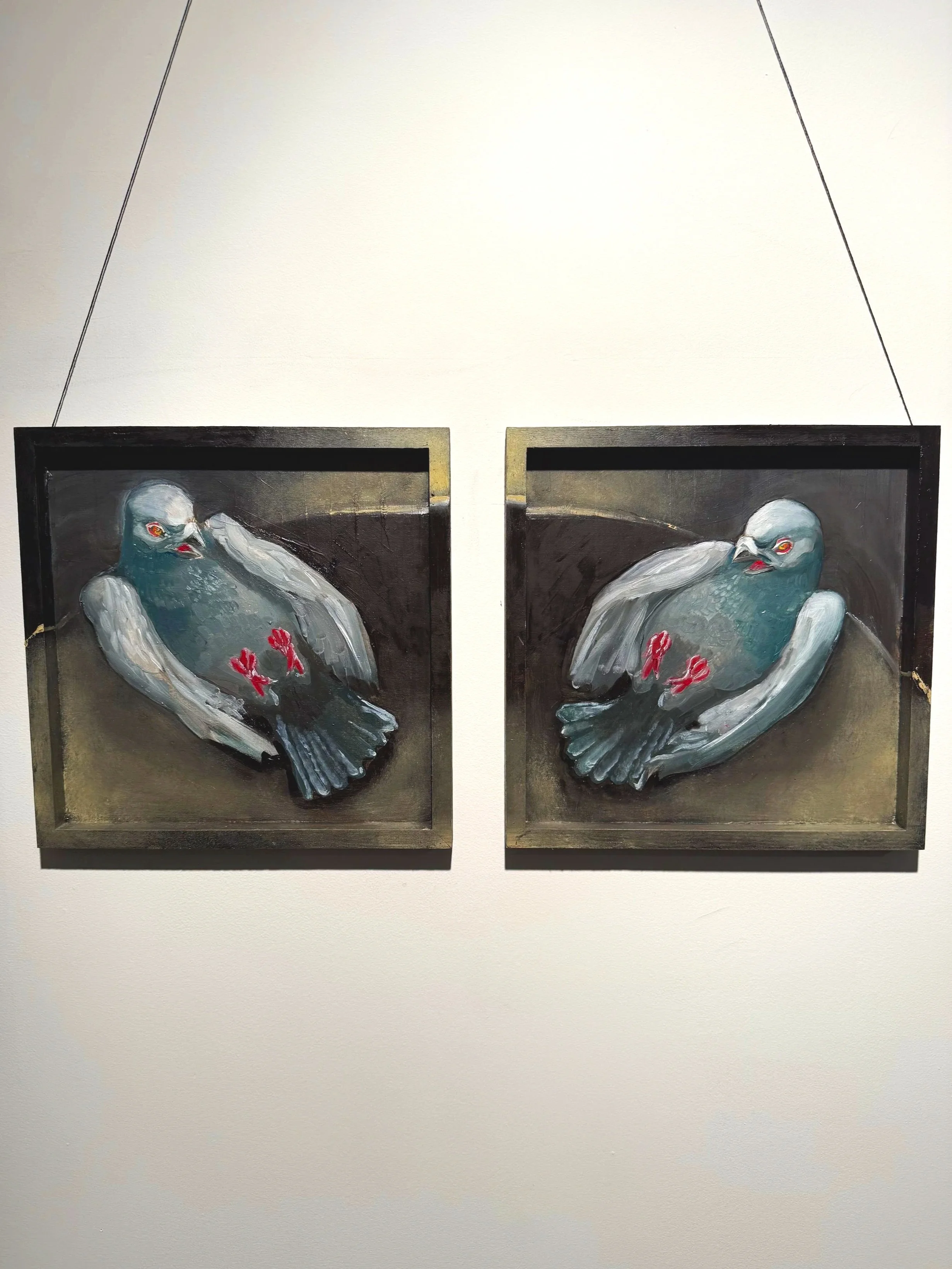
"Nest" 28 x 12" Oil paint, wood, string representation of familial ties, the nest, separation, and impossible connection
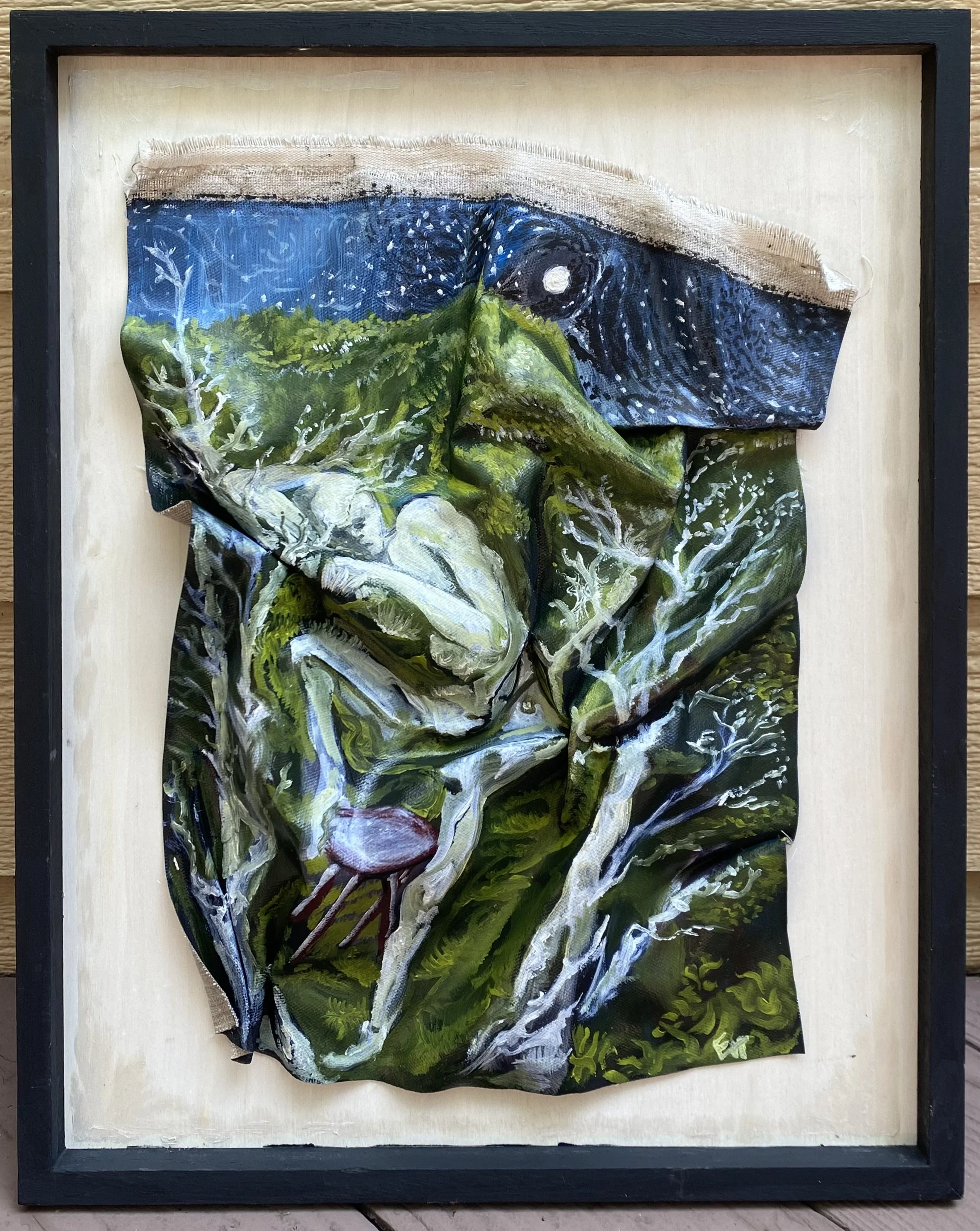
untitled 16 x 18", Oil paint, canvas, wood
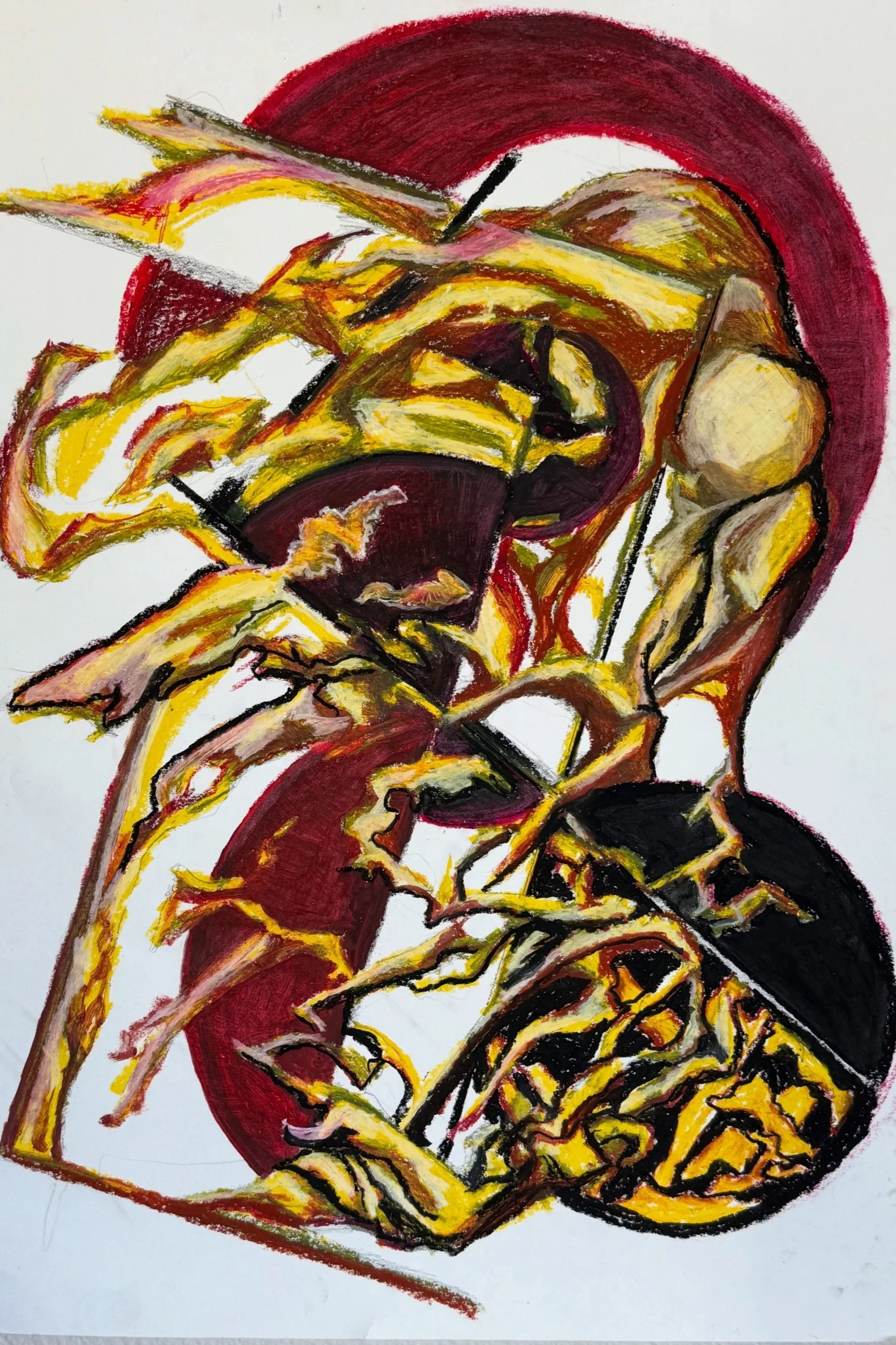
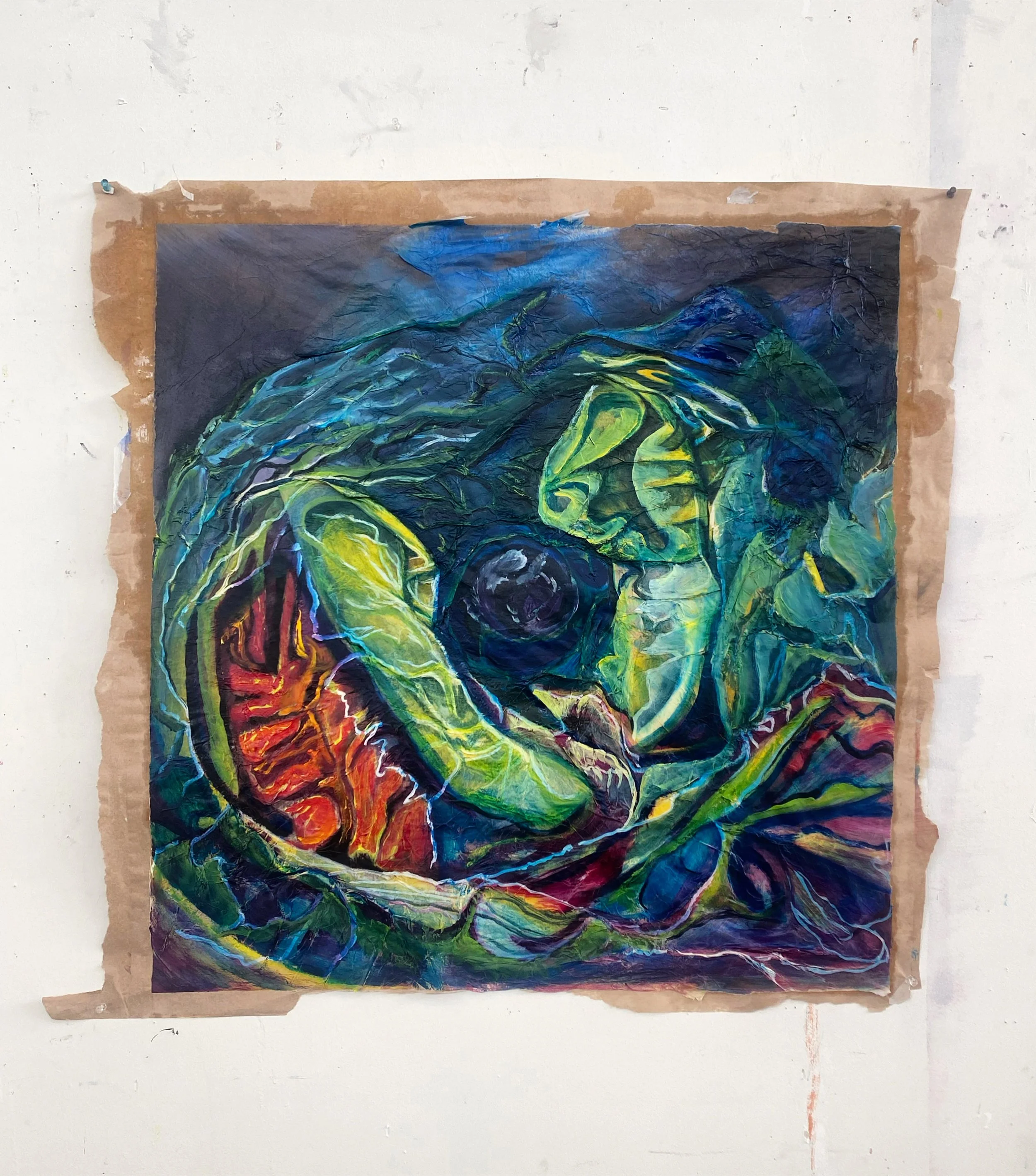
Pearl 36 x 36", oil paint, butcher paper, tissue paper

"untitled" 36 x 28", oil paint, canvas
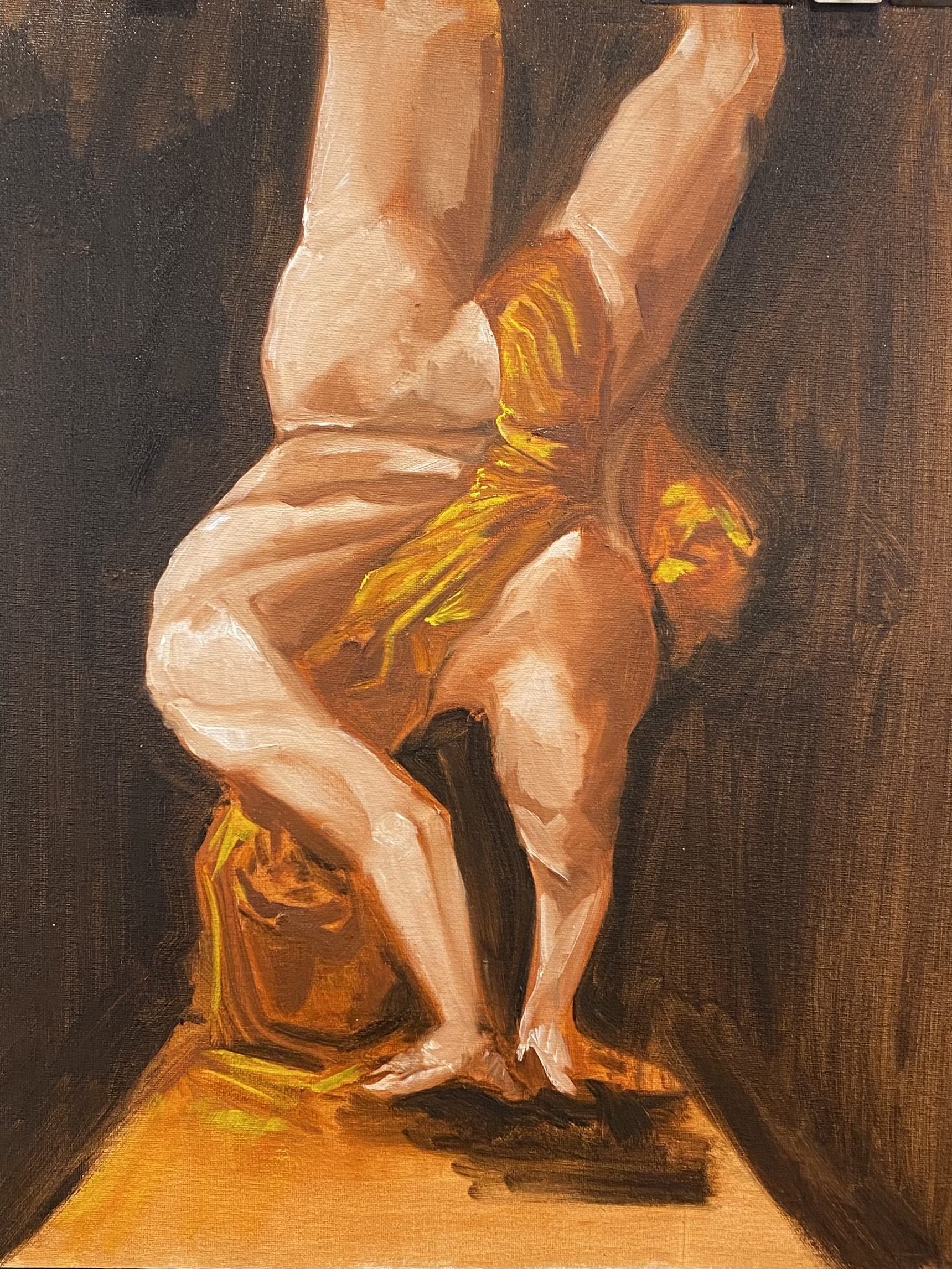
"(untitled) fabric and figure study" 16 x 18", Oil paint on canvas
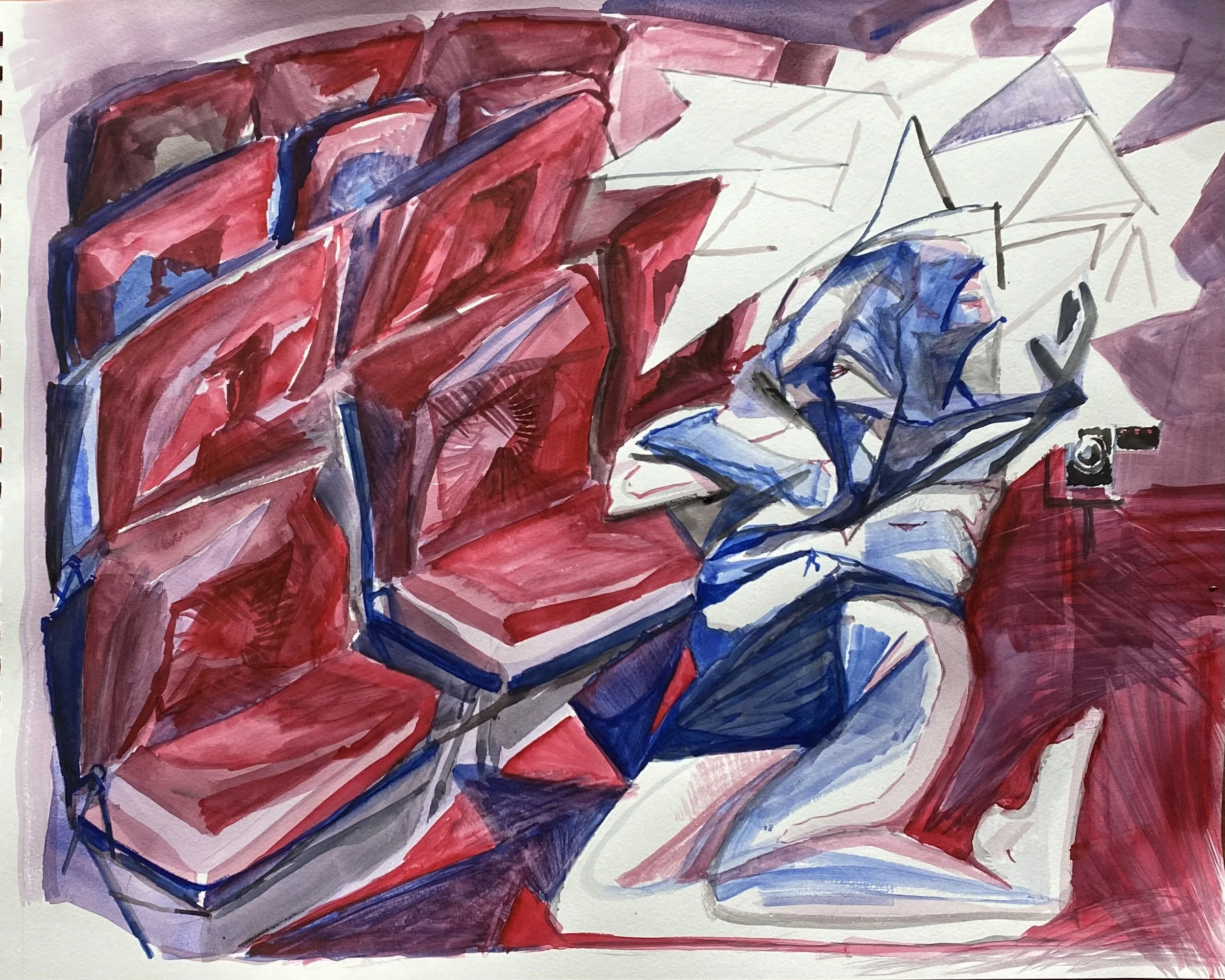
"spectacle" 18 x 16", gouache
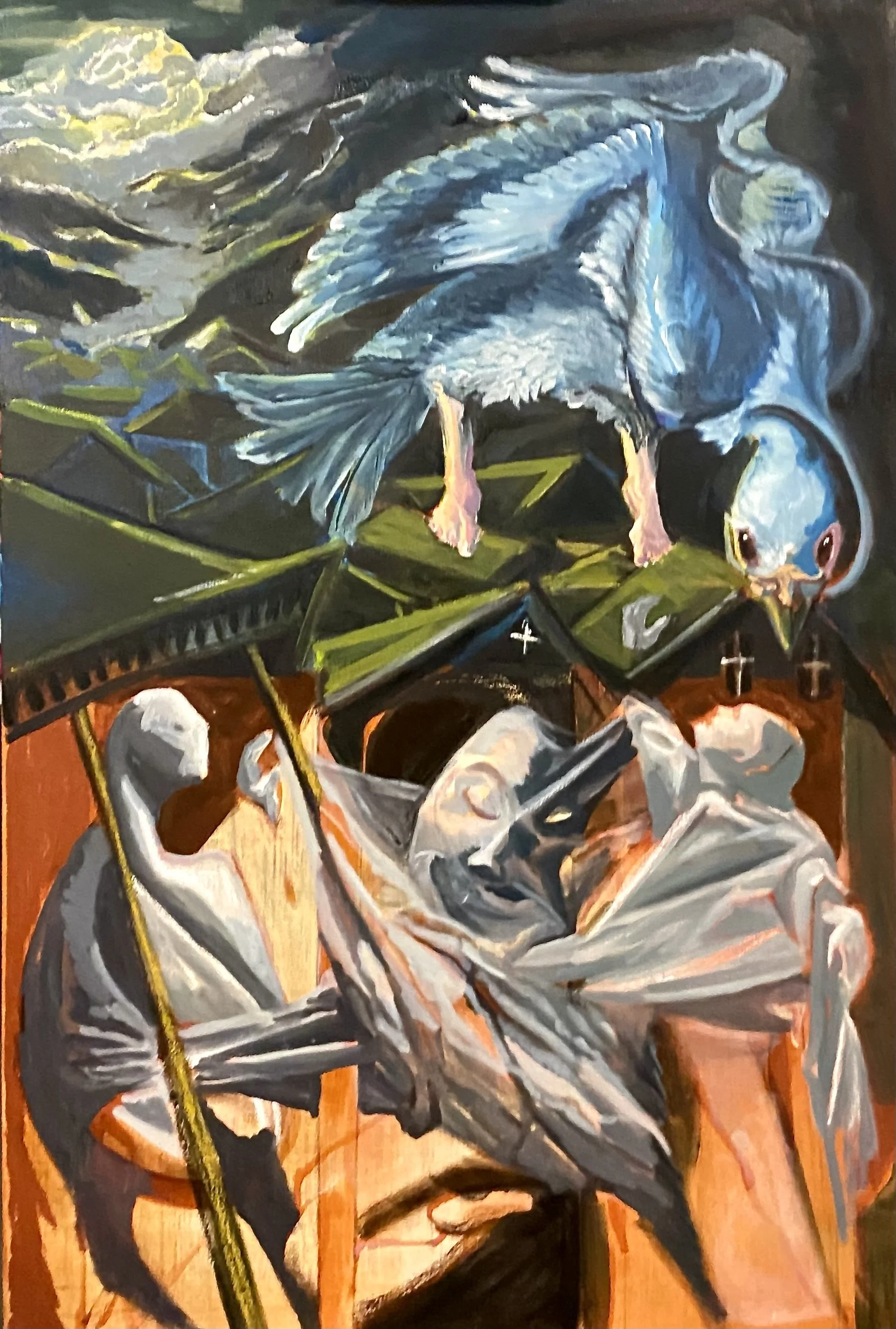
"bird brain" 28 x 38", oil paint, oil pastel, canvas
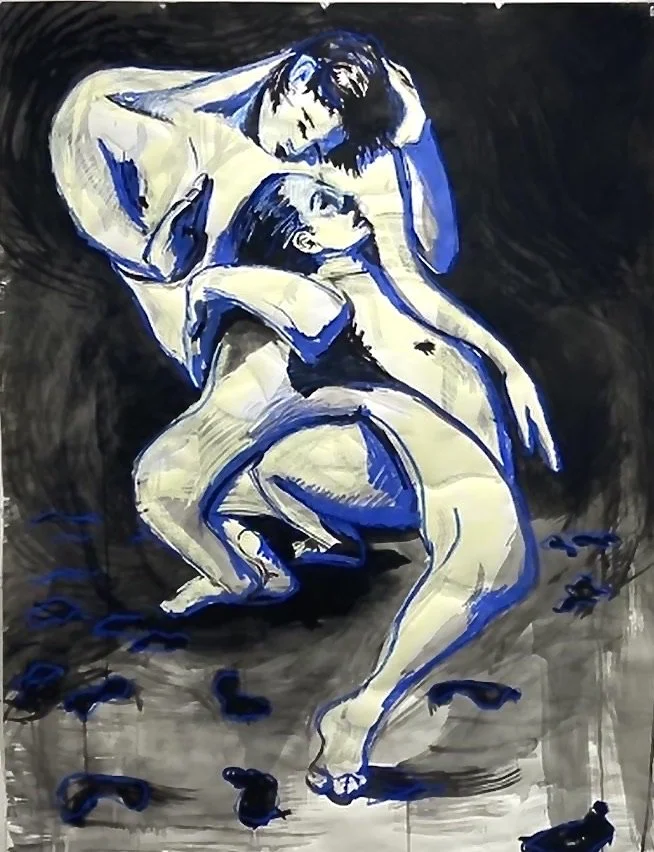
"untitled" 48 x 60", India ink, oil pastel, chalk pastel
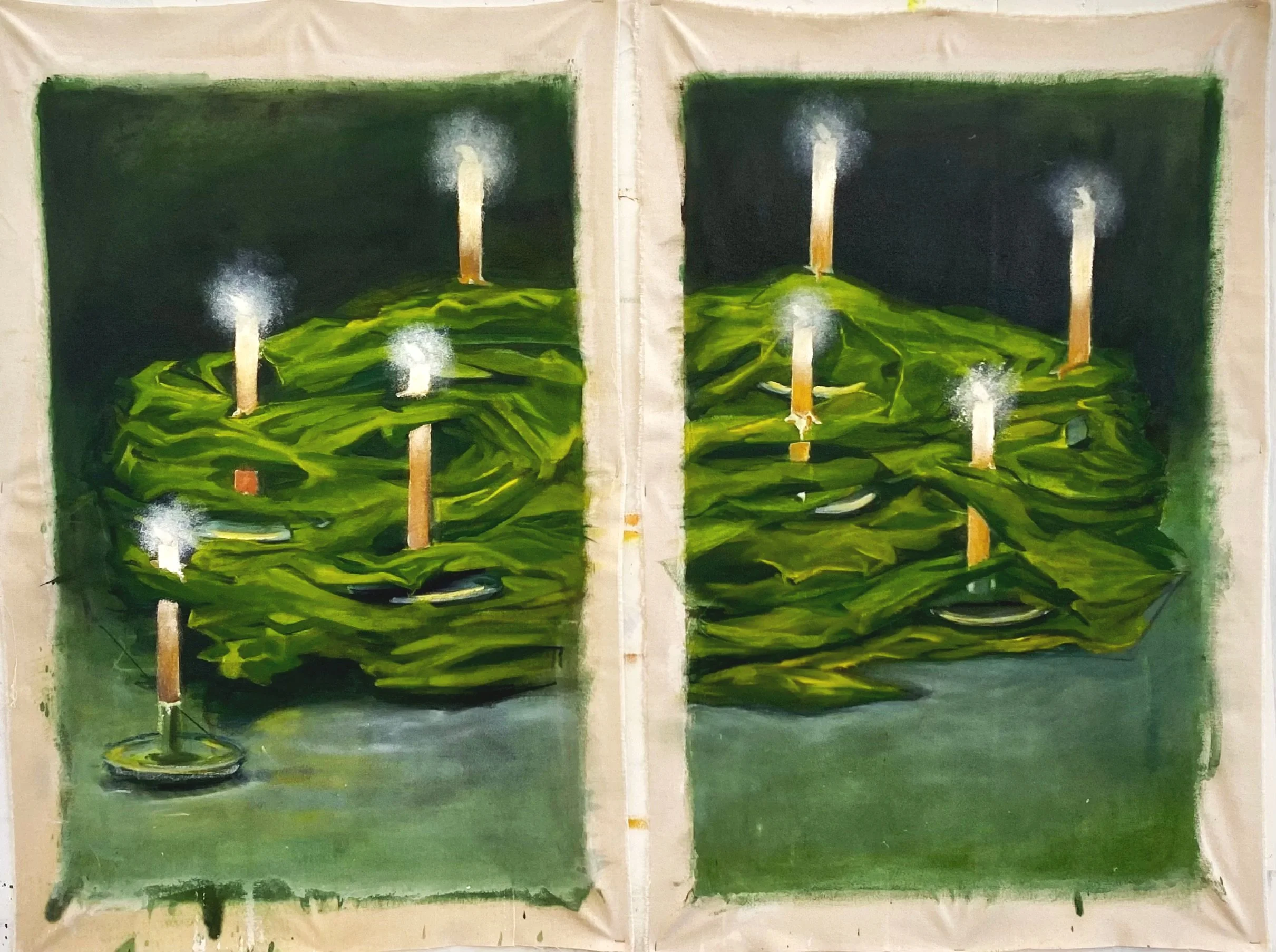
"table soup" 40 x 32" Oil paint, canvas
In Fall 2025, I focused on expanding my practice to include more materials, deceptive installations, and focused colors in an attempt to find what I was interested in producing for the spring. I discovered that what actually interests me about my art is the states it goes through. I wondered whether photographing my process would better portray what excites and interests me about my art. However, I found that photographing the art and presenting it in stages does not fully capture the nuance of a material, and no matter how good the photo, texture is lost.
In my final critique I presented two works. The first was a painting on dyed mulberry paper which was pasted to wood. It felt more like what I had done in the past, and felt comfortable because I could still see my brushstrokes–my effect–on the work. As I was painting it, I began to feel that I was ruining something that was already interesting to me, mimicking the texture that was already there. By putting myself (painting) on the died paper, I was taking it further from the recognizable, printlike, pattern which I found so mesmerizing. In the second work I presented, I did not touch them with paint. I dyed the fabrics, let them dry, and hung them up without affecting them at all, and preserving their inherent intrigue. When the fabric was hung up on the wall, it retained the texture of a fabric all crumpled on the ground, and looked more like a photograph–but handmade.
After the critique, given the feedback that the process of the fabrics was more interesting, I pushed further. I dyed another piece and laid it out to dry. While drying, I realized the fabric had taken on another shape. I traced it with oil paint and laid it out to dry again on a table. It had taken a new shape. I traced it again. Through this process of recording the states of the fabric on the fabric itself, I could see its history. But, I could never return the fabric to any of the states it had been in before. It reminded me of nostalgia, and the impossibility of ever experiencing anything like our own past again, no matter how hard we attempt to recreate it.
In the spring, I want to dive deeper into this feeling of attempting to recreate that which can never be recreated. It is an impossible task that I think will inspire me in many directions. I plan to incorporate more materials and explore how I can represent the nuance of an object’s history three dimensionally, two dimensionally, or both.